
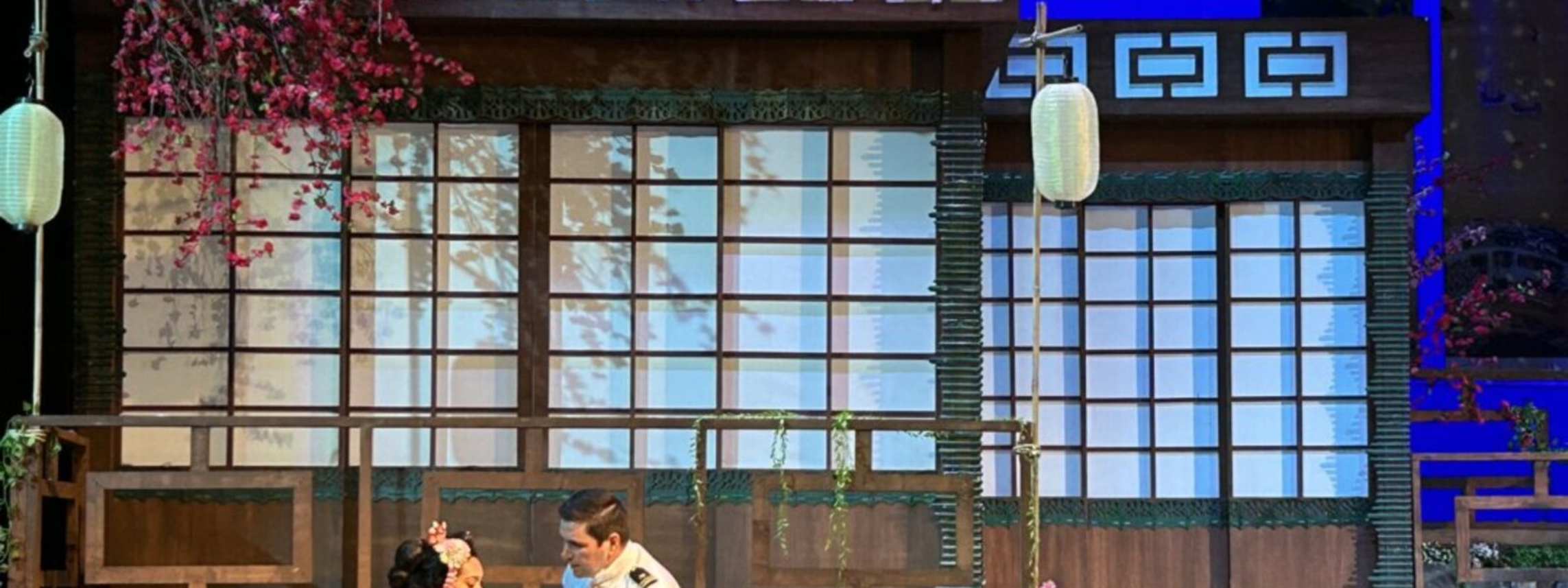
‘Madama Butterfly’ From the Pacific Opera Project: Puccini in Japanese
Commentary As an opera singer, it’s fascinating for me to receive questions about my art form from people who aren’t familiar with opera. Although some questions might be laughable to those of us who are immersed in the world of classical singing, I always appreciate any attempt to learn more about this beautiful genre of music. One question I received from a friend recently was, “Why are operas in Italian?” He quickly qualified the question with, “If they are? I’ve heard something like that.” My friend isn’t foreign to the world of performing, since he himself is a singer and actor, but he is much less familiar with the classical realm. I consider this an astute question, since Italian is considered the language of opera. The word “opera” is Italian, as are most of our technical terms. The first operas were written by Italians in their native language in the late 16th century. Since then, many of the legendary opera composers were Italians, including Rossini, Verdi, and Puccini. Even composers from other European countries, like the Austrian Wolfgang Amadeus Mozart, frequently wrote Italian operas. Of course, as I explained to my friend, there are probably as many German and French operas as Italian ones. There also are operas in English, Russian, Spanish, and even Czech!...